
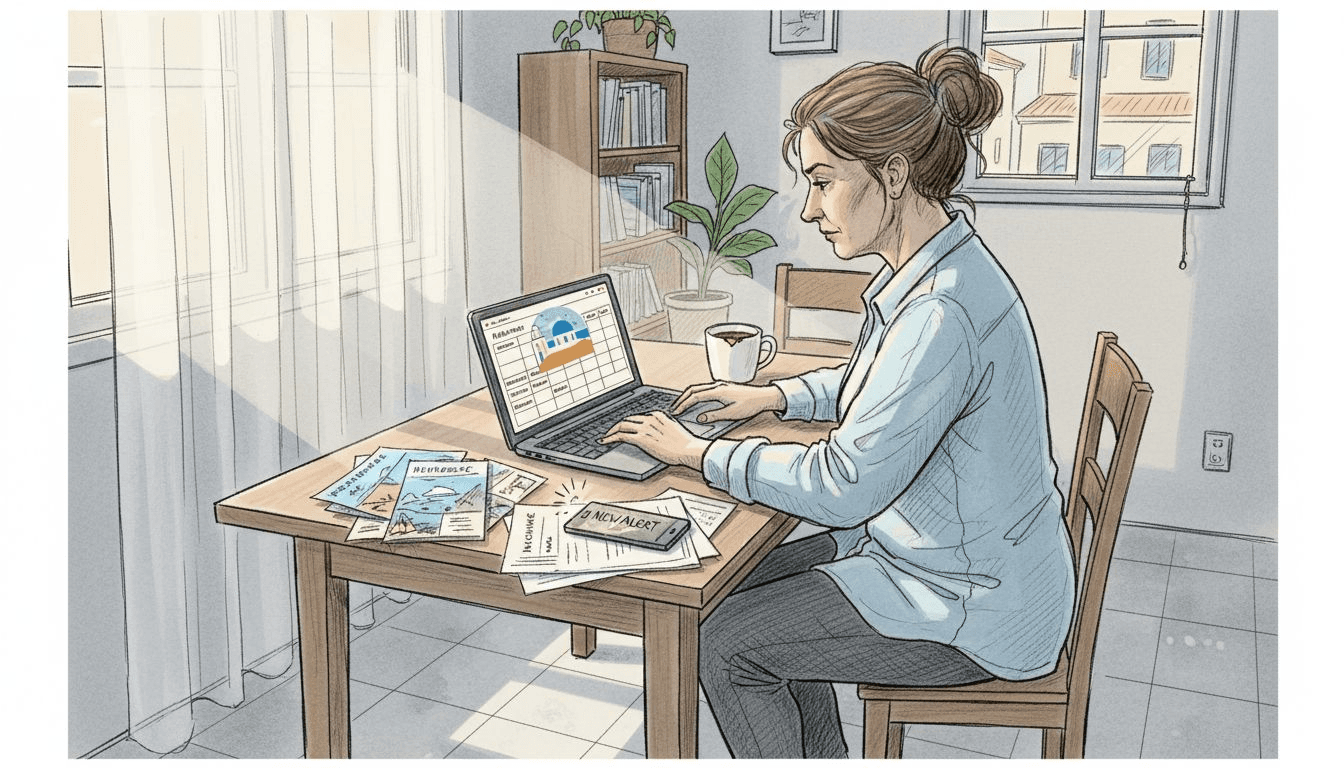
Professional remote property management can boost your Greek rental income by up to 30% while reducing operational stress. Yet many owners hesitate, unsure whether distant oversight can truly optimize guest experiences and revenue. This guide reveals how expert management transforms remote ownership into profitable, hands-off success through local expertise, dynamic pricing, and personalized guest communication.
Table of Contents
- Understanding Remote Property Management In Greece
- How Professional Property Managers Optimize Revenue Remotely
- Guest Experience And Communication Benefits Of Remote Management
- Maintenance, Emergencies, And Regulatory Compliance Challenges
- Common Misconceptions About Remote Property Management
- Decision Framework: Is Professional Remote Management Right For You?
- Implementing Remote Property Management Successfully
- Summary: Remote Property Management For Greek Short-Term Rentals
- Discover Expert Remote Property Management With TinosStay
- Frequently Asked Questions
Key Takeaways
| Point | Details | |-------|---------|| | Revenue Optimization | Professional management increases rental income through dynamic pricing and strategic marketing. | | Local Expertise Essential | On-the-ground knowledge handles maintenance, emergencies, and Greek compliance effectively. | | Guest Communication Matters | Personalized multilingual support drives satisfaction and repeat bookings. | | Technology Supports, Not Replaces | Automation aids efficiency but cannot substitute human expertise and local presence. | | Stress Reduction | Owners eliminate operational headaches while maintaining strategic control. |
Understanding Remote Property Management in Greece
Managing a short-term rental in Greece from another country presents unique challenges that professional services resolve. Time zone differences mean you're asleep when guests need urgent assistance. Language barriers complicate communication with local contractors and regulatory authorities. Unexpected emergencies require immediate on-site attention you cannot provide from abroad.
The Greek rental market demands specialized knowledge. Tourism seasonality varies dramatically between islands, with peak periods differing from mainland patterns. Regulatory compliance requirements shift frequently, requiring constant legal monitoring. Without local expertise, you miss revenue opportunities and risk compliance penalties.
Professional property managers deliver comprehensive services designed for remote owners:
- 24/7 multilingual guest communication and support
- Regular property inspections and preventive maintenance coordination
- Dynamic pricing optimization based on local events and demand
- Compliance management for Greek short-term rental regulations
- Emergency response protocols with trusted local contractors
- Professional photography and listing optimization across booking platforms
Owners attempting self-management from abroad struggle with delayed responses that damage guest satisfaction. Maintenance issues escalate into costly emergencies. Pricing remains static, missing peak demand opportunities. The operational burden creates constant stress while revenue underperforms.
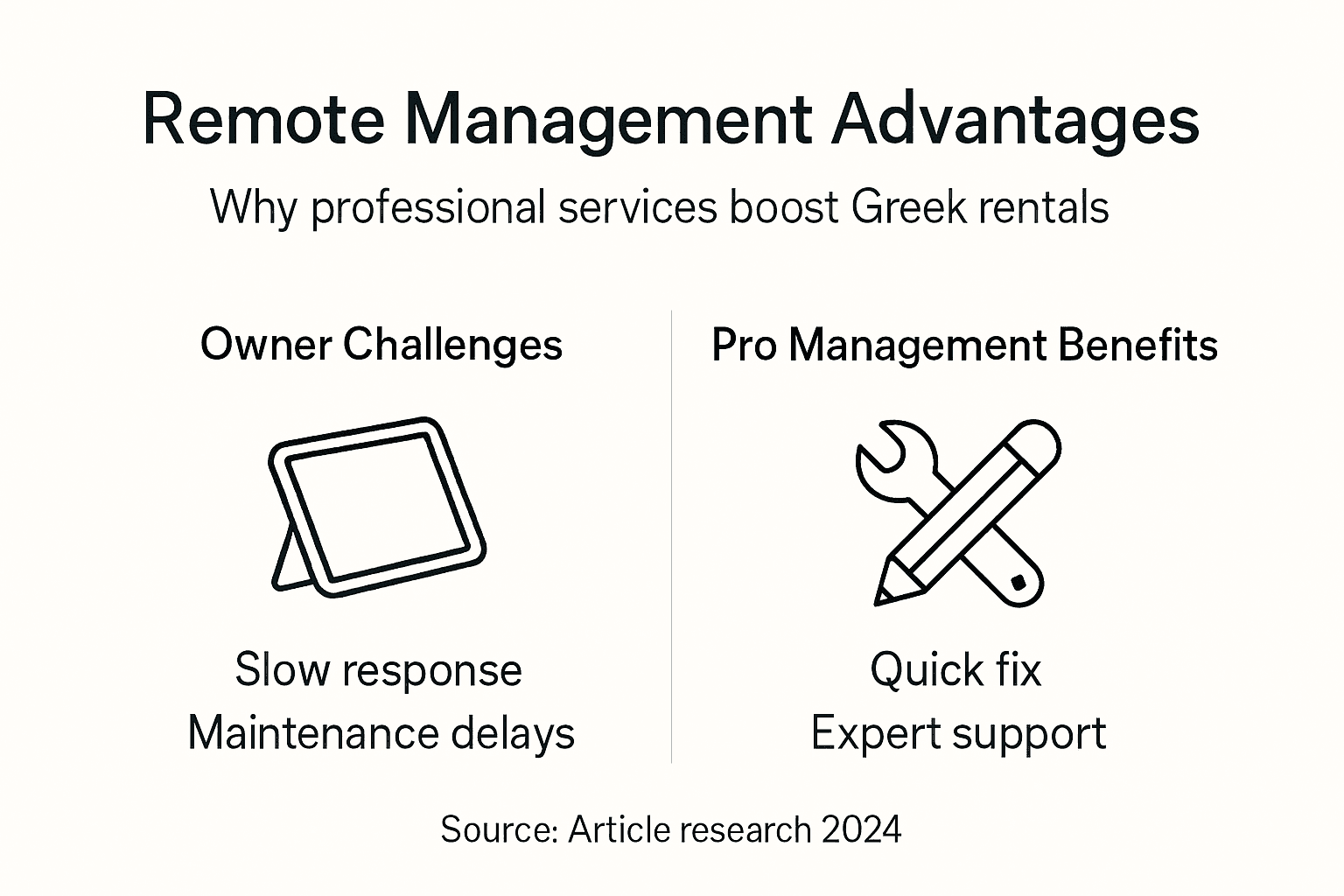
Greek rental markets reward those who understand local nuances. Festival dates, ferry schedules, weather patterns, and cultural events all influence demand cycles. Professional managers leverage this knowledge to optimize your property's performance year-round.
How Professional Property Managers Optimize Revenue Remotely
Expert property managers deploy sophisticated strategies that consistently outperform owner-managed pricing. Dynamic pricing algorithms adjust nightly rates based on dozens of factors: local event calendars, competitor pricing, booking velocity, seasonal trends, and weather forecasts. This responsiveness captures up to 30% more revenue compared to static pricing approaches.
Multilingual communication proves critical in Greek tourism markets. Professional teams fluent in English, Greek, German, French, and Italian convert more inquiries into confirmed bookings. They answer questions promptly across time zones, building trust that drives reservation decisions. This accessibility directly impacts your bottom line.
Marketing expertise fills shoulder seasons when amateur listings sit empty. Professionals craft compelling descriptions highlighting unique property features and local attractions. They optimize listings across Airbnb, Booking.com, and niche European platforms. Strategic photography showcases your property's best angles during golden hour lighting.
Local tourism knowledge guides seasonal strategy. Managers understand when Tinos attracts pilgrims for religious festivals, when sailing enthusiasts arrive, and when families book summer vacations. They adjust minimum stay requirements and pricing tiers accordingly.
Revenue Strategy Comparison
| Approach | Average Occupancy | Revenue per Night | Annual Revenue |
|---|---|---|---|
| Self-Managed Static Pricing | 62% | €120 | €27,228 |
| Professional Dynamic Pricing | 78% | €156 | €44,428 |
| Revenue Difference | +16% | +30% | +63% |
Pro Tip: Request quarterly pricing strategy reviews with your property manager to ensure algorithms adapt to emerging market trends and new local competition.
Integrated technology platforms streamline operations without sacrificing personalization. Managers use tools that automate routine tasks like booking confirmations while flagging situations requiring human judgment. This hybrid approach maximizes efficiency while maintaining the personal touch guests value.
Guest Experience and Communication Benefits of Remote Management
Guest satisfaction directly correlates with response speed and communication quality. Properties responding within one hour receive 18% fewer negative reviews than slower competitors. Professional managers maintain 24/7 availability, answering questions during your sleeping hours and resolving issues before they escalate.

Personalized communication builds loyalty that drives repeat bookings. Rather than generic automated messages, skilled managers craft tailored recommendations: specific beach suggestions based on guest preferences, restaurant reservations for dietary needs, activity bookings for families with children. This attentiveness creates memorable experiences that guests reward with five-star reviews and return visits.
Properties with personalized communication have 22% higher repeat booking rates compared to those relying solely on automation. Guests appreciate the human connection and local expertise that technology alone cannot provide. They remember names, preferences from previous stays, and thoughtful touches that transform transactions into relationships.
Multilingual support removes friction from the booking journey. When German travelers ask questions in their native language and receive fluent responses, conversion rates soar. French guests feel welcomed when check-in instructions arrive in French. This cultural competence differentiates professional services from owner-managed alternatives.
Pro Tip: Choose management services offering integrated platforms that combine automated efficiency for routine tasks with immediate human escalation for complex guest needs, ensuring both speed and personalization.
The compound effect of superior communication shows in metrics. Higher occupancy rates, increased average nightly rates, more five-star reviews, and growing repeat guest percentages all flow from communication excellence. These improvements directly enhance property valuation and long-term investment returns.
Maintenance, Emergencies, and Regulatory Compliance Challenges
Maintenance delays damage guest experiences and property values simultaneously. When air conditioning fails during August heat, immediate response determines whether guests endure discomfort or enjoy seamless service. Local property managers reduce maintenance-related complaints by 25% through established contractor networks and rapid response protocols.
Preventive maintenance eliminates most emergencies before they occur. Professional managers conduct monthly inspections identifying worn seals, failing appliances, and structural issues early. Regular servicing extends equipment lifespan and prevents mid-stay breakdowns. Studies show preventive programs avoid up to 70% of emergency repairs.
Greek short-term rental regulations require constant compliance monitoring. Registration requirements, tax obligations, safety standards, and local zoning rules evolve frequently. Professional managers maintain legal expertise and government relationships that keep your property compliant. Non-compliance risks fines, booking platform deactivation, and legal complications.
Maintenance Response Comparison
| Scenario | Self-Management | Professional Management |
|---|---|---|
| Average Response Time | 6-24 hours | 1-3 hours |
| Emergency Resolution | 24-72 hours | 4-12 hours |
| Preventive Inspections | Irregular | Monthly scheduled |
| Contractor Availability | Limited network | Established partnerships |
| Guest Satisfaction Impact | Frequent complaints | Minimal disruption |
Emergency protocols require local presence and expertise you cannot provide remotely. Burst pipes demand immediate water shutoff and restoration coordination. Power outages need generator deployment or guest relocation. Security issues require on-site assessment and resolution. Professional managers handle these situations seamlessly while keeping you informed.
Regular property inspections protect your investment beyond guest satisfaction. Managers identify maintenance needs, verify cleaning standards, check inventory, and photograph property condition. This documentation proves invaluable for insurance claims and prevents gradual deterioration.
Common Misconceptions About Remote Property Management
Many owners harbor false beliefs that undermine their rental success. Correcting these misconceptions clarifies realistic expectations and optimal strategies.
-
Misconception: Automated tools replace all guest communication needs. Reality: While automation handles routine confirmations efficiently, personalized responses to specific questions, local recommendations, and problem resolution require human judgment and cultural knowledge that technology cannot replicate.
-
Misconception: Self-management remotely achieves equivalent results to professional services. Reality: Research shows 60% of remote self-managers experience significant stress and revenue underperformance due to time zone challenges, language barriers, and inadequate local networks for maintenance and compliance.
-
Misconception: Technology eliminates the need for local maintenance expertise and legal knowledge. Reality: Automated messaging alone is insufficient; personalized, real-time communication significantly improves guest satisfaction and repeat bookings, and local presence remains critical for emergency response and regulatory compliance.
-
Misconception: Hiring professional management means owners abdicate all responsibility and control. Reality: Effective partnerships involve owner input on strategic decisions like pricing ranges, property improvements, and booking policies, while managers handle daily operations and tactical execution.
-
Misconception: Management fees outweigh the financial benefits of professional services. Reality: Revenue increases from optimized pricing, higher occupancy, and reduced emergency costs typically exceed management fees by substantial margins, delivering net income gains alongside stress reduction.
Balanced approaches combine technology efficiency with human expertise. Smart owners leverage automation for routine tasks while ensuring professional support handles situations requiring judgment, local knowledge, and immediate physical presence. This hybrid model maximizes both operational efficiency and guest satisfaction.
Decision Framework: Is Professional Remote Management Right For You?
Evaluating whether professional management fits your situation requires assessing multiple factors beyond simple cost calculations. Financial analysis starts with comparing potential revenue uplift against management fees, but must include avoided costs from prevented emergencies, compliance penalties, and your own time value.
Operational complexity determines management necessity. Properties renting year-round with high guest turnover demand more intensive management than seasonal vacation homes with long-stay guests. Language barriers matter more when targeting international markets versus domestic travelers. Time zone differences create greater challenges for owners in distant countries versus neighboring regions.
Key assessment criteria include:
- Current occupancy rates and revenue compared to local market benchmarks
- Your availability and willingness to handle 24/7 guest communication
- Existing local networks for maintenance, cleaning, and emergency response
- Compliance confidence with Greek rental regulations and tax requirements
- Stress levels from current self-management approaches
- Investment goals prioritizing income maximization versus personal use flexibility
Regulatory knowledge requirements vary by property type and location. Apartments in regulated urban zones face stricter compliance demands than rural villas. Properties marketed internationally need multilingual legal documentation. Professional managers navigate these complexities daily.
Hybrid models suit some ownership scenarios. Seasonal owners who self-manage during personal vacation periods might hire professionals for remaining months. Properties split between short-term and long-term tenants could use professional management only during high-season short-term periods. Evaluate your specific situation rather than assuming all-or-nothing approaches.
Financial modeling should account for opportunity costs. Hours spent managing your rental remotely have alternative uses. Revenue lost from suboptimal pricing or maintenance delays compounds annually. Stress impacts quality of life beyond monetary calculations. Professional management often delivers positive ROI on multiple dimensions simultaneously.
Implementing Remote Property Management Successfully
Selecting the right management partner determines your success. These best practices guide effective implementation.
-
Prioritize local expertise and proven track records. Choose providers with deep knowledge of your specific Greek island or region, established contractor networks, and verified guest satisfaction metrics across multiple properties.
-
Demand integrated technology platforms. Ensure management services use professional software providing real-time access to bookings, financial reporting, maintenance logs, and guest communication histories through owner portals.
-
Establish clear communication protocols and expectations. Define response time requirements, reporting frequency, approval thresholds for expenses, and escalation procedures for issues requiring owner decisions.
-
Review service agreements thoroughly before signing. Understand fee structures, contract terms, responsibilities for various costs, performance metrics, and exit clauses to avoid future disputes.
-
Implement maintenance protocols and emergency response plans. Document acceptable service providers, budget limits for routine versus emergency repairs, property access procedures, and guest relocation policies for major incidents.
-
Schedule regular performance reviews. Quarterly meetings reviewing occupancy trends, revenue performance, guest feedback, and market conditions ensure continuous optimization and alignment.
Pro Tip: Request client references and conduct direct conversations with current owners using the management service to verify claims about responsiveness, transparency, and financial performance.
Successful partnerships balance owner involvement with professional autonomy. You maintain strategic control over major decisions like renovation investments and pricing philosophies while delegating tactical execution to experts. This division of responsibilities maximizes both property performance and your peace of mind.
Onboarding requires upfront effort that pays long-term dividends. Provide detailed property information, existing vendor contacts, preferred service standards, and access credentials. Time invested in thorough onboarding prevents future miscommunication and operational friction.
Summary: Remote Property Management for Greek Short-Term Rentals
Professional remote management transforms Greek rental properties from stressful obligations into profitable investments. Expert services boost revenue through dynamic pricing, multilingual communication, and local market knowledge while eliminating operational headaches. Technology supports efficiency but cannot replace human expertise for guest relations, emergency response, and regulatory compliance.
Local presence proves essential for maintenance coordination, quality control, and navigating Greek rental regulations. Personalized communication drives guest satisfaction, positive reviews, and repeat bookings that compound long-term success. Owners reduce stress and financial risk by partnering with established professionals while maintaining strategic control.
Common misconceptions about automation sufficiency and self-management viability lead owners to underestimate professional service value. Realistic assessment of operational complexity, regulatory requirements, and opportunity costs reveals compelling financial and lifestyle benefits. Taking informed steps toward professional partnership positions your property for optimized performance in competitive Greek rental markets.
Discover Expert Remote Property Management with TinosStay
Managing your Greek rental property remotely demands local expertise you can trust. TinosStay delivers comprehensive professional property management services combining on-the-ground presence with sophisticated technology platforms.
Our team handles every operational detail: dynamic pricing optimization, 24/7 multilingual guest communication, preventive maintenance coordination, and full regulatory compliance. We leverage deep Tinos knowledge and established local networks to maximize your revenue while ensuring exceptional guest experiences. Our transparent reporting keeps you informed and in control without operational stress. Whether you own a seaside villa or mountain retreat, our integrated approach delivers measurable results. Discover how visit TinosStay transforms remote ownership into profitable, hands-off success.
Frequently Asked Questions
What does professional remote property management include for Greek rentals?
Comprehensive services cover guest communication, dynamic pricing, listing optimization, cleaning coordination, maintenance management, regulatory compliance, and financial reporting. Managers handle daily operations while owners maintain strategic control and receive transparent performance updates.
How does dynamic pricing work for short-term rentals in Greece?
Sophisticated algorithms adjust nightly rates based on local events, seasonal demand, competitor pricing, booking velocity, and weather forecasts. This responsiveness captures peak revenue opportunities while maintaining competitiveness during slower periods, typically increasing income 25-35% over static pricing.
Who handles emergency maintenance when I manage my property remotely?
Professional managers maintain established networks of trusted local contractors for immediate emergency response. They coordinate repairs, verify quality, manage costs within approved budgets, and keep you informed throughout the process, typically resolving issues within hours rather than days.
What role do owners play when hiring professional property management?
Owners set strategic direction including pricing ranges, property improvement investments, and booking policies while managers execute daily operations. Effective partnerships involve regular communication, quarterly performance reviews, and collaborative decision-making on major issues.
How can I verify my Greek rental property complies with current regulations?
Professional managers maintain current knowledge of registration requirements, tax obligations, safety standards, and local zoning rules. They ensure proper documentation, timely tax filings, and adherence to evolving regulations, protecting you from fines and platform deactivation risks.